If you live above a shop on this strip, you already know the arrangement has upsides. You also know that when something goes wrong with the drainage, you are the person standing in it and you have almost no control over the cause.
This is written for that position specifically. Not for the building owner and not for the operator downstairs, but for the household upstairs trying to work out what is worth doing and what is not theirs to carry.
Where drainage is shared with a commercial kitchen, the accumulation causing a blockage is usually not coming from your flat, and the obligations around trade waste sit with the commercial operator rather than with you. What is worth your effort is documenting the pattern, establishing whether the line is genuinely shared, and getting that to whoever can act on it.
- Record every blockage with the date and which fixtures
- Note what the material looked like, if you saw it
- Ask for the line to be camera inspected and for the footage
- Pass the record to the owner or agent rather than the shop
- Trade waste obligations are the operator's, and Sydney Water is the authority
On this page
1. Your position, stated plainly
You occupy the upper part of a building whose ground floor is used very differently from yours. If the drainage is shared, material you did not generate accumulates in a line you also use, and when it stops, it stops for you as well.
You cannot change what a commercial kitchen puts down a drain, you cannot commission work on shared pipework, and depending on your arrangement you may not be able to authorise much at all.
That is a genuinely awkward position and it is worth being honest about rather than pretending there is a clever solution. What there is instead is a small set of things that are worth doing, and a larger set that are not yours.
An operator running a commercial kitchen is doing exactly what the premises is for. The issue is shared infrastructure, and treating it as a personal dispute makes it worse for everybody who has to keep sharing the building.
2. Keep the record, because nobody else is
This is the single most useful thing available to somebody in your position, and it costs nothing.
- The date and time of every blockage or slow drain.
- Which fixtures were affected, and in what order.
- What the material looked like if you saw any, described plainly.
- Whether it was raining, which rules a different cause in or out.
- Who attended, what they said, and what they did.
- How long it was before it happened again.
One blockage is an incident. Six blockages with dates is a pattern, and a pattern is the thing an owner or an agent can act on. Without the record, each event arrives looking like the first one, and the response is another clearance.
3. Ask for the camera, and ask for the footage
The single question that changes this situation is whether the drainage is actually shared, and if so, where the material is accumulating.
Nobody can answer that from the building's paperwork after a century of conversions. A camera answers it in about an hour, and the footage belongs to whoever paid for it. Ask for it, and keep it with your record.
It is also the thing that takes the heat out of the situation. Footage does not accuse anybody. It shows what is there, and everybody involved can look at the same thing rather than at each other.
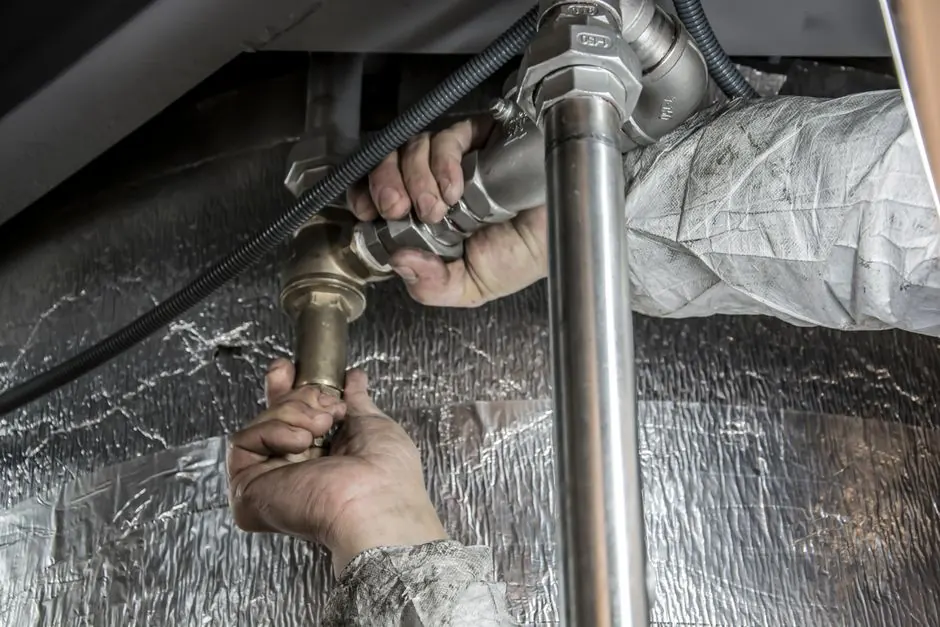
4. Who to take it to
Take it to whoever has standing to act, which is generally the building owner or the agent rather than the operator downstairs.
That is not about avoiding the shop. It is that the person who can commission work on shared drainage, or raise a question about how the building's infrastructure is performing, is the owner. An operator is a tenant of the same building and may have no more control over the shared line than you do.
If you are renting, your agent is the route, and giving them a dated record rather than a complaint makes it far more likely something happens.
Same drain, third time this year?
Ask for it to be filmed. The footage is what turns a complaint into a decision.
5. What is not yours to carry
- Trade waste obligations. Those sit with the commercial operator. Sydney Water is the authority on what they are, and it is not a matter for a resident to police.
- Commissioning work on shared drainage. Not a tenant decision, and frequently not an individual occupier's at all.
- Deciding who pays. That follows from leases and ownership documents you have almost certainly never seen.
- Negotiating with the business downstairs. You can be neighbourly about it, and you are not obliged to be the person resolving a building's infrastructure problem.
Being clear about that boundary is worth as much as anything else here, because the most common failure mode is a resident spending months trying to solve something that was never in their power.
6. The things inside your own flat that do help
A short list, and worth doing partly because it removes your own fixtures from the argument.
- Keep fats and oils out of your own sink. Not because your household is the cause, but because it takes one variable off the table.
- Use a strainer in the kitchen and the shower.
- Deal with a slow drain early rather than living with it, because early is when it is still information.
- Know where your isolation valve is, and check it turns.
- Check the flexible hoses under your sink and basin, and raise it in writing if they look old.
- Photograph anything before it is cleaned up.
None of that fixes a shared line. What it does is mean that when the question of cause comes up, your own fixtures are demonstrably not part of it, and that is a genuinely useful position to be in.
- Living above a food premises means sharing infrastructure you do not control.
- Trade waste obligations sit with the commercial operator, not with a resident.
- The most useful thing you can do is keep a dated record of every blockage.
- Ask for the line to be camera inspected, and ask for the footage.
- Take it to the building owner or agent, who has standing to act, rather than the shop.
- Keep your own fixtures demonstrably clean of the argument. It is worth doing.
Living above a kitchen FAQs
Is the restaurant downstairs responsible for my blocked shower?
Possibly, and possibly not, and it is not something to conclude without looking. Where the drainage is shared and the accumulation is grease, that points somewhere. Where it is not shared, it does not. A camera answers it.
Can I make the shop do something?
That is not a resident's role, and an operator may have no more control over shared infrastructure than you do. Trade waste obligations are between the operator and Sydney Water. Your route is the building owner or agent.
Should I get my own plumber in?
For something clearly inside your flat, follow whatever process applies to your tenancy or ownership. For a shared line, do not commission work on it, because it is not yours to commission.
What if nothing happens after I report it?
Keep reporting it in writing and keep the record. Six dated events with a pattern is a very different document from six phone calls nobody wrote down. Anything about your rights as a tenant is a question for NSW Fair Trading rather than for us.
Does it help to stop putting oil down my own sink?
It helps, and mainly for a reason people miss: it takes your own fixtures out of the question. When cause is being discussed, being able to say your household has not contributed is worth having.
Whose footage is it if I pay for the camera?
Whoever pays for the inspection should get the footage, and it is worth asking for it explicitly at the time. Keep it with your record.